
The Nevada Public Records Act in Washoe County
Washoe County public records sit under NRS Chapter 239, the Nevada Public Records Act. The Act states a general right to inspect and copy public books and records. It applies to county offices, court administrative records, and many state agencies that touch Washoe matters. The starting point is open. The exception is a record that a statute, a court rule, or a court order makes confidential. If an agency withholds a record, the agency should name the legal authority for that withholding.
The Public Records Act does not erase other confidentiality laws. Juvenile records, adoption files, sealed criminal cases, mental health proceedings, and some warrant materials remain restricted under their own statutes. Court case data on the public portal at caseinfo.washoecourts.com may show the case exists while shielding the sealed papers. The same logic applies in the Recorder's portal: a document may be in the index but blocked from public download if a statute requires redaction.
Note: A general agency preference for privacy is not enough to block a public record. The agency must point to a specific law or order.
Who Holds Washoe County Public Records
Washoe County does not have one universal records desk. The county uses a split custodian model. A user looking for a record should pick the office that maintains that record. The county website at washoecounty.gov and the court site at washoecourts.com both list direct contacts. Calling the wrong office wastes a day. Calling the right office often gets a same-week answer.
| Record type | Custodian | Contact |
|---|---|---|
| Civil, criminal, family, probate, juvenile court files | Second Judicial District Court | recordreq@washoecourts.us |
| Marriage license / officiant / business / board records | Washoe County Clerk | (775) 784-7287 |
| Deeds, liens, maps, UCC, proof of marriage | Washoe County Recorder | (775) 328-3660 |
| Jail booking / current custody / arrest | Washoe County Sheriff | (775) 328-3001 |
| Citation, misdemeanor, small claims, eviction | Reno or Sparks Justice Court | (775) 325-6500 / (775) 353-7600 |
| City ordinance, parking, city traffic | Reno or Sparks Municipal Court | (775) 334-2290 / (775) 353-2271 |
Most users mix up the Clerk and the Recorder. The Clerk issues marriage licenses, holds officiant filings, manages board minutes, and runs business filings such as fictitious firm names. The Recorder permanently records real-property documents and proof-of-marriage certificates after the ceremony. The District Court keeps the case file itself: motions, orders, judgments, dockets, and hearing minutes. The Sheriff keeps the jail roster and law-enforcement reports.
Records That Are Not Public in Washoe County
Several record types stay closed even under the open-records baseline. Each has its own statute and its own review path. The court does not list every restricted file on the public portal. A user who gets a "no record" response on a sensitive case type should treat that as a confidentiality flag, not as proof that the case never existed. The portal can show a case exists while keeping the documents sealed.
Common restricted categories in Washoe County include juvenile delinquency and dependency files under NRS Chapter 62H, adoption files under NRS Chapter 127, sealed criminal records under NRS Chapter 179, mental health and civil-commitment files under NRS Chapter 433A, and sex-offender registry data with the public-use limits in NRS Chapter 179B. Civil cases can be sealed by court order under the Nevada Supreme Court rules at SCR Rules Governing Sealing and Redacting Court Records.
The juvenile statute page sets out how juvenile delinquency and dependency files are sealed or made confidential. Public searchers should not assume juvenile file details will appear on the District Court portal.
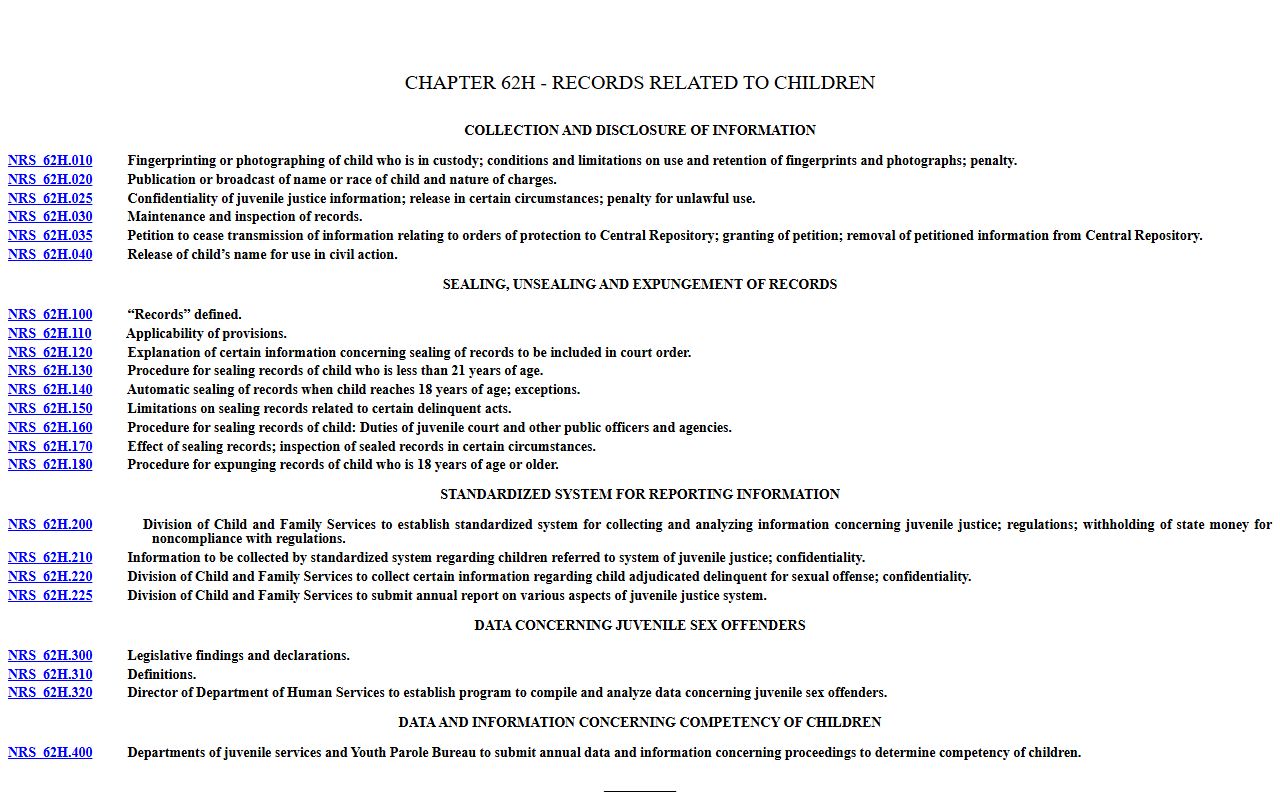
The juvenile chapter shows why a Washoe juvenile case may not produce visible documents in the public portal. Access usually belongs to parties, attorneys, agencies, or by court order.
Adoption records are also limited under Nevada law. The adoption statute describes how adoption records remain confidential through the court file.
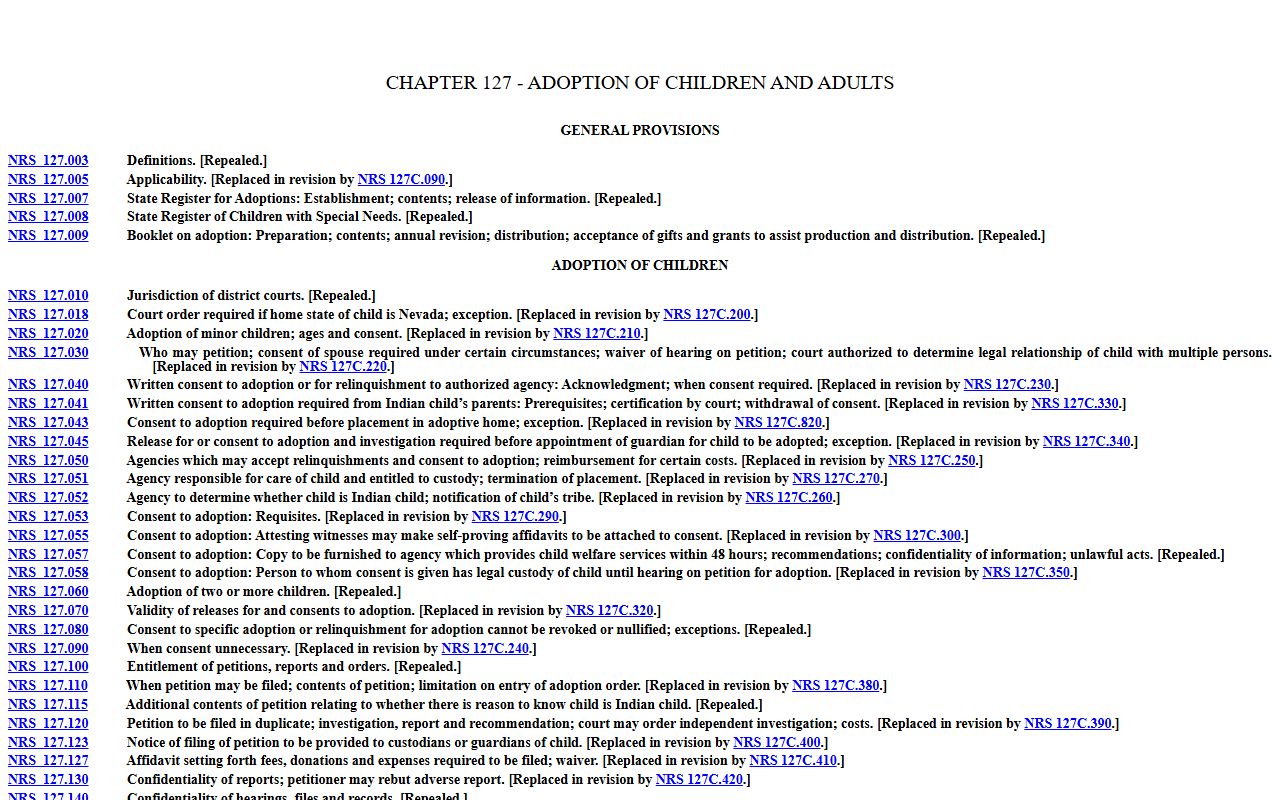
The adoption chapter spells out which agencies and parties may access the file. It is a common source of "no result" responses on Washoe family-case searches.
How to File a Washoe County Public Records Request
A request that names the custodian, the record, and a clear delivery method gets answered faster. The Public Records Act does not require a specific form. Some Washoe County offices use a form anyway. A typed email with the basics is usually enough. Pay close attention to fees. The agency may charge for copies, certifications, or staff search time. Free inspection at the counter is one option, but staff cannot give legal advice.
- Identify the record type. A divorce decree is a court file. A property deed is a Recorder document. A jail booking is a Sheriff record.
- Identify the custodian. Use the table above. The court is recordreq@washoecourts.us; the Recorder is record@washoecounty.gov.
- Write the request in plain language. Include party names, dates, case or document numbers, and the record format you want.
- State your preferred delivery method. In person, by mail, by email, or pickup at the counter.
- Ask for the fee in advance. The Recorder and the Clerk publish fee schedules. The court will quote copy and certification charges on request.
- Allow time for review. Confidential portions may need to be redacted before release.
- If the agency denies access, ask which statute or order the agency relies on. Nevada law allows court review of public-record disputes.
Note: The Public Defender FAQ at washoecounty.gov/defender/faq reminds users that court staff cannot give legal advice; they can route records requests and explain procedure only.
Washoe County Court Records Requests
Court records make up the largest single bucket of Washoe County public records. They include civil cases over $15,000, family and divorce cases, felony and gross misdemeanor criminal cases, juvenile matters subject to confidentiality, probate, guardianship, and appeals from the lower courts. The court's case-management system holds the data. The portal exposes case-level information for free. Some filed documents may require an eFlex subscription account, an in-person counter visit, or a formal records request.
Records Request contact: recordreq@washoecourts.us. Mailing address: Second Judicial District Court, 75 Court Street, Reno, NV 89501. The court FAQ at washoecourts.com/Main/CourtFAQs sets out hours and copy procedures. The court accepts drop-off filings in the drop box near security.
For lower-court records, contact the issuing court. Reno Justice Court has a records research request form. Sparks Justice Court takes copy requests at the counter. Reno Municipal and Sparks Municipal Courts handle their own city-court records. Combined searches across all four courts are not available in one window.
Washoe County Recorder Records
The Washoe County Recorder permanently preserves recorded documents for real property and several other classes. The office is at 1001 East Ninth Street, Building A, Reno, NV 89512. Phone (775) 328-3660. Email record@washoecounty.gov. The Recorder records and indexes documents such as deeds, deeds of trust, notices of default, liens, UCC filings, maps, military discharge papers, declarations of homestead, mechanic's liens, federal tax liens, and marriage certificates. Online indexing for land records starts November 19, 1991. Marriage certificate indexing is available from 1965 forward.
The Recorder's main page links to the self-service portal. Users search by party name, last-name-space-first-name style, with no comma. The Recorder cannot search by address, legal description, or assessor parcel number. Plain copies and certified copies have set fees.
The Recorder statistics page explains coverage years and clarifies that proof-of-marriage certificates are recorded after the ceremony, not at license issuance. Users seeking the license itself should ask the Clerk; users seeking the marriage certificate should ask the Recorder.
Washoe County Public Records Fees
Fee structures vary by office. The Public Records Act allows agencies to charge for copies, certifications, electronic products, and authorized staff time. The table below pulls common Washoe fees from the official Clerk and Recorder pages. Court records fees and certified copy fees are quoted by the records office at the time of request.
| Service | Fee | Custodian |
|---|---|---|
| Clerk paper copy per page | $0.50 | County Clerk |
| Clerk certification | $6.00 | County Clerk |
| Clerk certificate of search | $6.00 | County Clerk |
| Recorder document copy per page | $1.00 | Recorder |
| Recorder certified copy of marriage record | $15.00 | Recorder |
| Recorder plain marriage record copy | $1.00 | Recorder |
| Recorder certification of any document copy | $4.00 | Recorder |
| Recorder bulk index data, weekly | $75.00 | Recorder |
| Justice Court records research | $1 per name per year | Reno Justice Court (NRS 4.060) |
The Clerk accepts cash, credit card, money order, cashier's check, or traveler's check. Credit card use carries a third-party fee of 2% plus $0.25. The Recorder accepts cash, check, money order, cashier's check, and credit card with a 3.5% processing fee. Bulk Recorder products start January 1, 2026 under NRS 239.052.
What to Include in a Washoe County Records Request
A clear request reduces back-and-forth. The Recorder's index lookup, for example, needs at least a party name and an approximate transaction date. The court Records Request inbox needs a case number or full party name. The Sheriff's inmate search needs at least the first three letters of a last name. Each office expects different anchors. The table below outlines the basic fields a Washoe County public records request should cover.
| Field | What It Shows | When Required |
|---|---|---|
| Requester name | Who is asking | Every request |
| Return contact | Email, mail, phone | Every request |
| Record type | Court file, deed, marriage, jail, citation | Every request |
| Party names | Grantor, grantee, plaintiff, defendant, petitioner | Most non-case-number searches |
| Case or document number | Court case number, recording number, citation number | If known |
| Date range | Filed, recorded, booked | Recorder name searches, court date searches |
| Copy format | Plain, certified, electronic | Every request |
| Delivery method | Pickup, mail, email | Every request |
| Fee acknowledgement | Willing to pay statutory fee | Every paid request |
The Sheriff's inmate search page warns that scammers may contact families pretending to need bail through Venmo, Cash App, Bitcoin, or gift cards. Washoe County offices never request public-record payment by gift card or by crypto.
Bulk Electronic Public Records
The Washoe County Recorder began a bulk electronic copy program on January 1, 2026. Under NRS 239.052, the Recorder charges a weekly rate for index data, for image data, or for combined index and image data. Weekly index data is $75. Weekly images are $100. Combined is $125. Title companies, banks, and other commercial users are the main audience. One-off public users still pay the ordinary per-page copy fee.
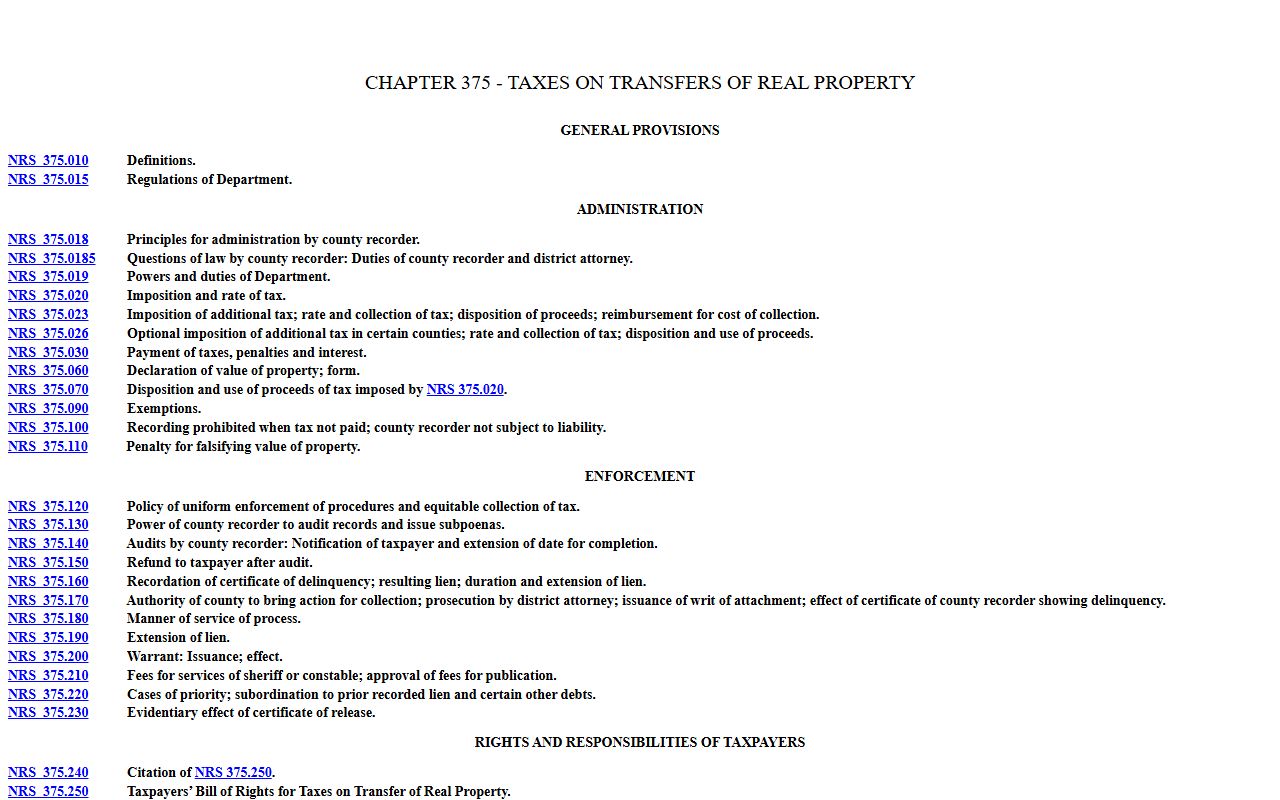
The Real Property Transfer Tax statute at NRS Chapter 375 sits next to the Recorder's bulk records program. Real-property document recording in Washoe County carries a transfer tax of $2.05 per $500 of value.
Court bulk data is not currently published as an open commercial feed. Researchers should use the public portal for individual searches and contact recordreq@washoecourts.us about larger requests.
Sealing and Redaction of Washoe County Records
Sealing is the legal process that closes a record from public view. Redaction is the process of removing or masking confidential information from a record that is otherwise public. Both happen in Washoe County court files. Adult criminal record sealing is governed by NRS Chapter 179. Once a record is sealed, ordinary public access stops. Some agencies retain limited access for authorized law-enforcement, licensing, or court use. A sealed person may generally state that the underlying event did not occur, with statutory exceptions.
Civil sealing requires written findings under the Supreme Court rules. The findings must identify a compelling privacy or safety interest that outweighs public access. The rule defines court records broadly enough to cover indexes, calendars, dockets, registers of actions, orders, judgments, minutes, and information in the case-management system. Sealing in district court continues in appellate court unless ordered otherwise.
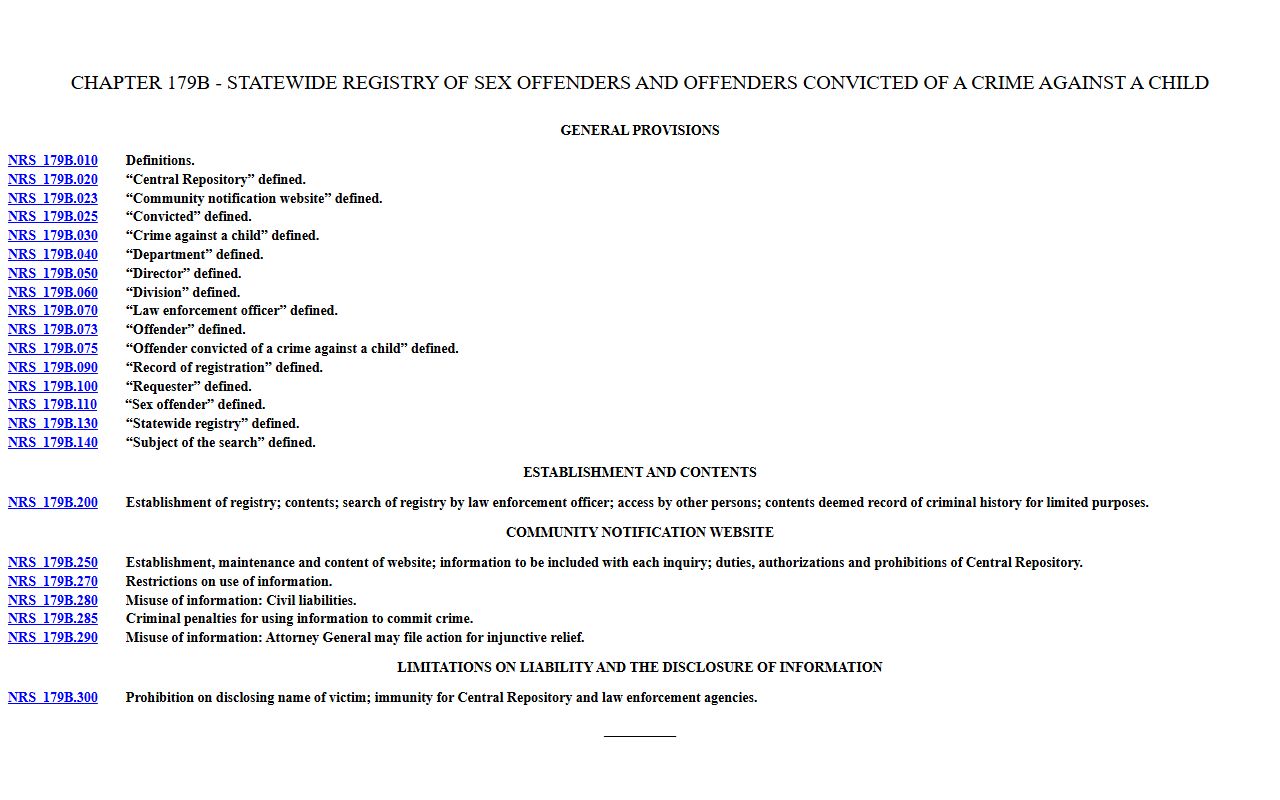
The Nevada sex offender registry statute at NRS Chapter 179B caps what the public registry may post. Tier 1 offenders with adult victims are not posted. Tier 1 offenders with child victims, Tier 2 offenders, and Tier 3 offenders are posted. The registry warns users not to use the data for insurance, lending, credit, employment, housing, or education decisions except as the statute allows.
Mental-health files follow a different track. NRS Chapter 433A sets out civil-commitment confidentiality. Court orders, HIPAA, and clinical-privacy rules keep most files closed.
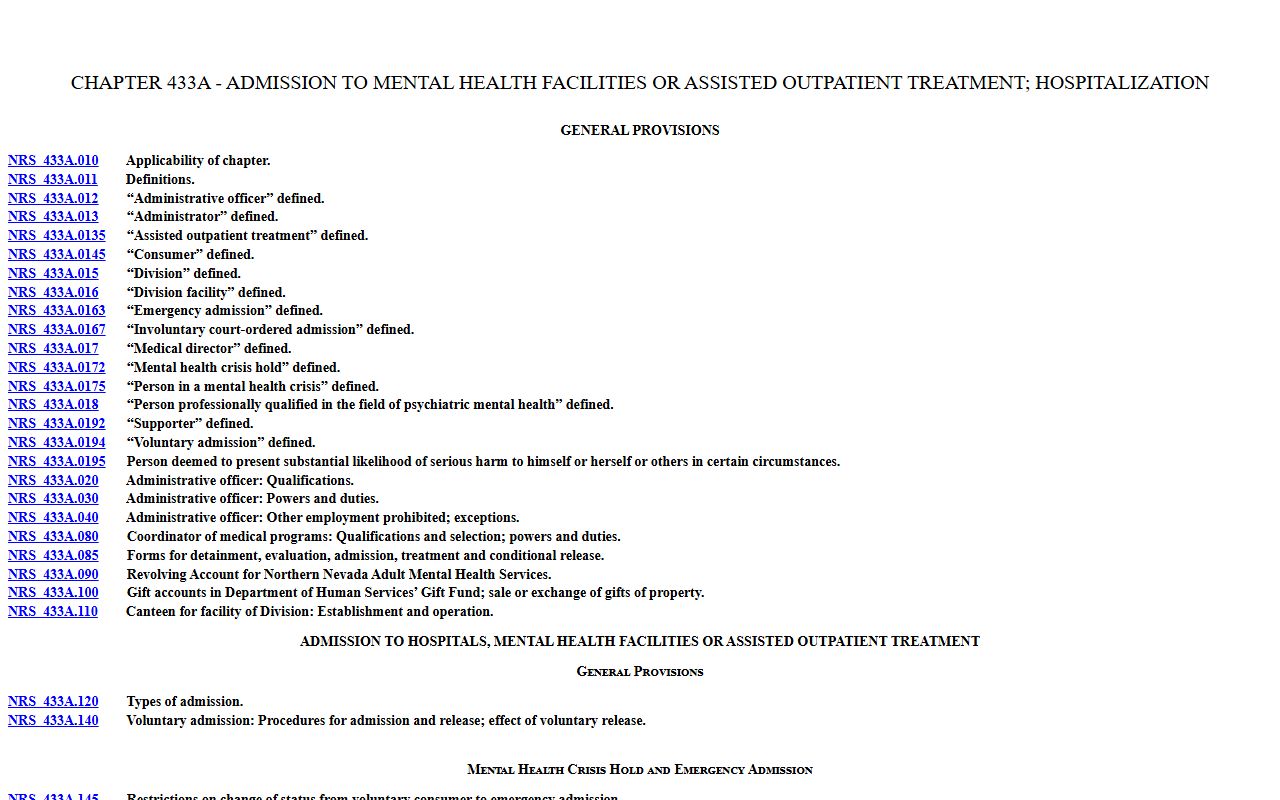
The mental-health chapter shows why a Washoe Competency Court entry can appear on a docket while the clinical and treatment records remain off the public portal.